No urgency to stay Tata Sons board meet says Bombay high court
Times of India
Times of India
AI Summary
The Bombay High Court has refused to defer Tata Sons' November 30, 2026 board meeting, rejecting Tata Trusts' urgent interim relief over a dispute concerning casting votes under Articles 104B and 121 of the company's Articles of Association, while noting proceedings remain subject to the outcome of interim applications.
The Bombay High Court in its reasoned order out on Saturday said it saw no reason to defer Tata Sons Board meeting scheduled on 30th November, 2026, since it also has, other items on the agenda other than confirmation of the minutes of a Sept 17 meeting for re-appointing N Chandrasekaran as its executive chairman, “and that too with effect from 27th February, 2027.’’ Justice Abhay Ahuja in a 21-page detailed order said the Nov 30 meeting also has on agenda the “compliance with RBI letters” of September 11 and Nov 16, one of which calls for a compliance by December 11, 2026 and that is why the meeting has been scheduled on Monday, rescheduled from Nov 26 at the request of Noel Tata.
The HC observed that Monday’s agenda also calls for discussion to convene an Extra Ordinary General Meeting of the Tata Sons and discussion on the proposals and letters by Noel Tata, Trusts nominee and to review and approve the statement of guarantees and investments of Tata Sons as well as addition or deletion of names of Trustees holding ordinary shares of Tata Sons.
The HC noted Tata Sons’ argument that the suit was sprung last minute and also it was filed belatedly –70 days later-- to challenge the September 17 resolution, hence “there was no urgency’’ to stay the meeting. The HC also noted that though the Sept 17 meeting minutes do not form part of the court proceedings filed by the Trusts and “no disclosure with respect to the notice and the accompanying documents / explanatory statements for the said meeting appear to have been made.”
Justice Ahuja factored in the arguments and the tussle between Tata Trusts who had moved against Tata Sons over interpretation of two crucial articles—104B and 121 of Tata Sons Articles of Association over whether casting vote can effectively sway the vote outcome when Trust nominee directors of the company, differ and thus lack a majority, in the meeting on proposal that require a poll.
The HC said the defendants—Tata Sons—raised the issue of the very maintainability of two suits filed by the two Tata Trusts, Sir Dorabji Tata Trust (SDTT) and RDTT, by citing section 50 of the Maharashtra Public Trusts Act.
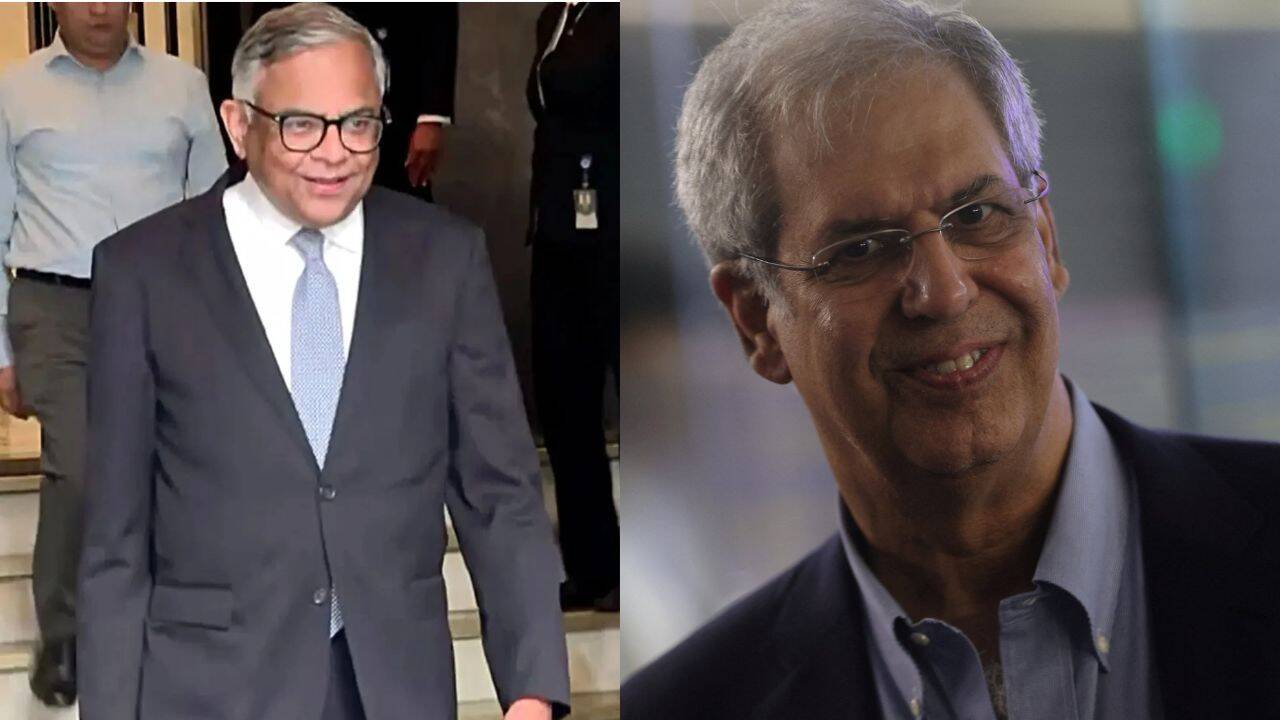
The HC noted that the two Tata Trusts and Noel Tata—one of the Trust nominated director of Tata Sons were on one side and Tata Sons and its five other directors including Venu Srinivasan, the other nominated director on the other.
Denying urgent interim relief to the Tata Trusts whose senior counsel sought deferment of the meeting as the immediate interim relief, the HC said, “no case is made out for grant of any urgent interim relief or for deferment of the meeting. The meeting is to proceed as scheduled.”
But the HC, directed that Board meeting’s proceedings are subject to the outcome of the interim applications filed by the Tata Trusts.
The suits sought a declaration from the HC that the Article 21 doesn’t permit the casting votes when nominees differ. Tata Sons said they need time put in a reply on legal arguments.
The HC said with Srinivasan voting in favor of a third 5-year term for Chandrasekaran, Harish “Manvani acting as the chairman for that agenda in September had exercised his casting vote in view of the equality of votes between the Trusts’ nominee Directors which resulted in reappointing Chandrasekaras as Executive Chairman’’. Article 121 first requires an affirmative vote of majority of the Trusts’ nominee directors—appointed under article 104B—and only then can the board proceed and then if overall the votes are equal, the chairman shall have the casting vote right, Trusts had argued through a bevy of senior counsel. For Tata Sons, an equally top-line of senior counsel had argued that Article 121 ought to be construed in a manner that doesn’t put the company in a functional deadlock and said the language of the Article permits such casting vote by the chairman when nominee directors differ.
The HC said since suit was filed on November 26 and the meeting is on Monday, “obviously, therefore, no sufficient time” has been afforded to Tata Sons or its directors to file their say to the interim application filed by Tata Trusts. The HC thus gave the Tata Sons, Chandrasekaran and other directors time to file replies and the Trusts to file any rejoinder and posted the matter on January 21. With the detailed order out, Tata Trusts, may consider moving in appeal, but its window is a sliver since the meeting is scheduled at 11.30 am on Monday, said a lawyer.
Sentiment analysis
AI insights
Low
22m ago
General
—
Financial analysis
Relevance
Medium
Market sensitivity
Medium
Affected sectors
Affected assets
Follow this story on TV
Live charts and AI commentary on one screen with Trade on tv.